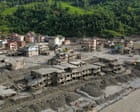
A new scientific study links global heating to the destabilization of a massive glacier collapse in August, which researchers say was likely weakened by unusually warm conditions before the event. The disaster sent millions of cubic meters of ice and snow crashing into a valley, unleashing catastrophic flash floods that struck downstream communities with little warning. Experts warn the collapse—one of the largest on record—highlights the growing risks posed by climate breakdown to fragile glacial systems. The findings underscore how rising temperatures may accelerate such extreme events in vulnerable regions.
Scientists say global heating was a destabilising factor in collapse of 200,000 sq metre glacier in AugustClimate breakdown probably weakened the glacier that collapsed causing catastrophic floods and killing hundreds of people in Nepal and Tibet last month, the first scientific study of the disaster has found.Researchers identified unusually warm conditions before the glacier’s collapse, which sent an avalanche of 110m cubic metres (3,885 cu ft) of snow and ice into the valley below. This triggered flash floods on an almost unprecedented scale, hitting communities downstream without warning. Continue reading...


