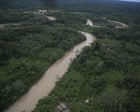
A groundbreaking study reveals that nearly nine in ten Indigenous participants in a Peruvian Amazon basic income trial adopted eco-friendly behaviors, suggesting direct financial support may help safeguard critical rainforest ecosystems. The findings, from a University of Bath analysis, add weight to discussions on whether unconditional payments to conservation-dependent communities could serve as an effective environmental protection strategy. Researchers highlight the potential of such schemes to incentivize sustainable practices while supporting vulnerable populations. The study could reshape global conversations on balancing economic aid with ecological preservation.
Researchers say almost 90% of participants in unconditional basic income scheme in Peru adopted environmentally beneficial practicesA pioneering project to provide Indigenous people in the Peruvian Amazon with an unconditional basic income has contributed to the protection of the rainforest, according to a study.The analysis from the University of Bath is expected to contribute to a growing debate about the role of direct payments to communities that maintain globally important ecosystems. Continue reading...


