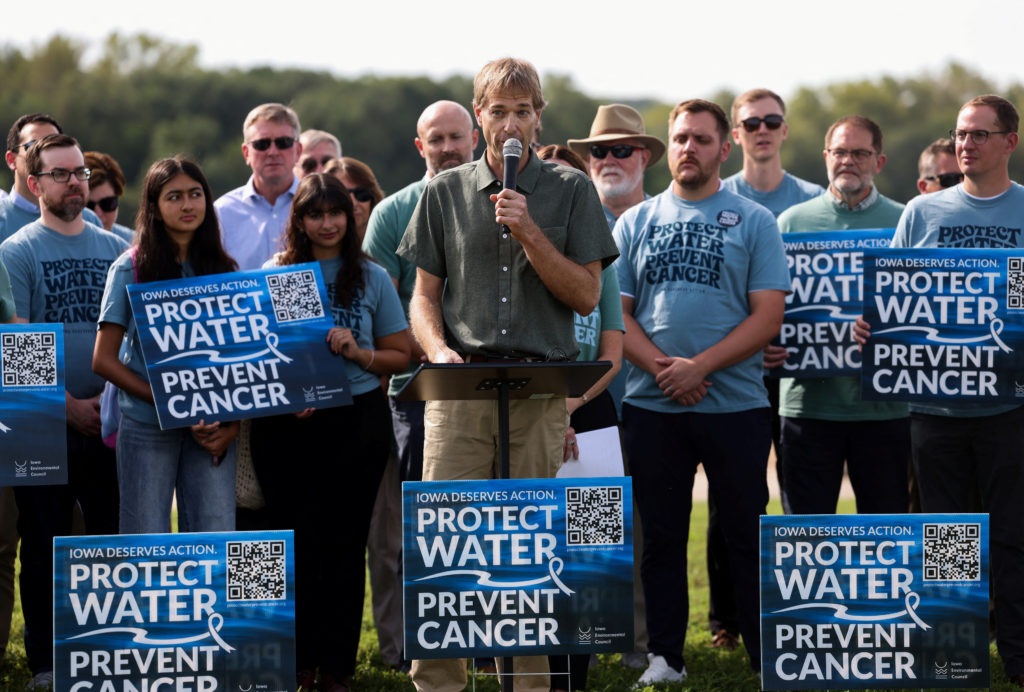
Excess nitrates and phosphorus from chemical fertilizers and animal waste are flowing into Iowa’s rivers and lakes after rain or snowmelt, posing risks to water quality. Urban areas that depend on these water sources for drinking supplies are particularly vulnerable to contamination. The runoff highlights ongoing challenges in balancing agricultural productivity with environmental and public health concerns. Concerns over water safety could intensify as pollution levels remain a persistent issue.
Chemical fertilizers and animal waste contain nitrates and phosphorus that can get washed with rain or snowmelt into the state's rivers. That affects Iowa's more liberal urban centers which rely on rivers and lakes for drinking water.


