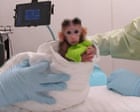
Exclusive undercover footage obtained by an animal-rights organization exposes distressing laboratory procedures involving newborn macaques at a major primate research facility. The video captures infants separated from their mothers and subjected to neurological testing after prenatal exposure to domoic acid, a naturally occurring marine toxin linked to human illness. Research records confirm the monkeys, some as young as two days old, were part of a long-term study investigating the toxin’s effects, which spanned over half a decade. The revelations raise ethical questions about the treatment of non-human primates in scientific research.
Animal-rights group released video footage that shows distressed baby macaques undergoing lab experimentsFootage released by the animal-rights group Peta reveals, for the first time, filmed experiments at the University of Washington’s National Primate Research Center (WaNPRC), in which newborn monkeys were separated from their mothers and subjected to neurological tests after prenatal exposure to a neurotoxin.Records show that the infant monkeys, some just two days old, were used in research on domoic acid, a toxin produced by marine algae that accumulates in shellfish and can cause illness in humans. The experiments were part of a project that ran for six years until 2020. Continue reading...


