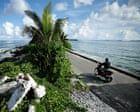
New research reveals that even if global emissions are reduced to net zero—a key target of the 2015 Paris Agreement—the world’s poorest populations, particularly in tropical regions, will still face disproportionate climate impacts for longer than wealthier nations. While temperatures in Europe and North America have risen within their historical ranges, tropical areas have experienced more extreme warming, leaving vulnerable communities at greater risk. The findings underscore a persistent global inequality in climate resilience, with economic disparities shaping who suffers most from rising temperatures. Experts warn that without targeted interventions, the gap between affected regions could widen further.
Scientists found unequal impact of the climate crisis would not be reversed even if implicit goal of the 2015 Paris agreement is achievedThe unequal impact of the climate crisis on the world’s poorest people, including those in tropical areas, has been highlighted by new research that finds they will be among the last to feel the benefits if global greenhouse gas emissions are cut to net zero.Temperatures have risen more significantly in tropical areas relative to their historic range than at higher latitudes, including in wealthier countries in Europe and North America. Continue reading...


