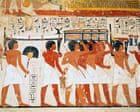
New archaeological research on skeletal remains from Egypt’s ancient royal cemetery at Umm el-Qa’ab suggests that high-ranking officials and artisans may have been ritually sacrificed alongside their pharaohs. Fractures discovered in several skulls from the site—linked to the First Dynasty and dating back over 5,000 years—support a long-standing theory proposed by early Egyptologists about the practice of human accompaniment in royal burials. The findings shed light on the elaborate funerary customs of early Egyptian rulers, whose tombs and ceremonial enclosures at Abydos reflect the power and religious beliefs of the time. The study offers a rare glimpse into the extreme measures taken to honor deceased monarchs in one of history’s earliest known civilizations.
Study of remains taken from royal cemetery at Umm el-Qa’ab appears to confirm early Egyptologist’s theoryCourt officials and craftspeople serving early Egyptian kings may have been sacrificed when their ruler died, according to research that found fractures in several ancient skulls.The royal cemetery of Umm el-Qa’ab near Abydos features the tombs and enclosures of the First Dynasty rulers of Egypt, and dates as far back as 3,000BC. Continue reading...


